परिचय
About
Devoted, through day and night
तत्पर अहोरात्र
Thathpara Ahoratra is a research initiative devoted to the sacred sciences of Bhārat — Yantra, Vāstu, Jyotiṣa, Yoga, temple wisdom, and the cosmic science that binds them. We are not a teacher selling a path, nor a blog collecting articles. We are seekers who travel to the source — caves, gopurams, inner sanctums — and record what we find, so that knowledge kept for millennia is neither lost nor diluted.
Where this begins
This devotion is, in part, inherited. Our roots run through a family of temple-builders, astrologers, and Vāstu practitioners — a household in which the sacred sciences were the rhythm of daily life rather than a subject taken up later. A great-grandfather, a freedom fighter, worked in temple construction, Vāstu, and Jyotiṣa; from childhood we were taken from temple to temple, learning to feel a place before we could name what we felt.
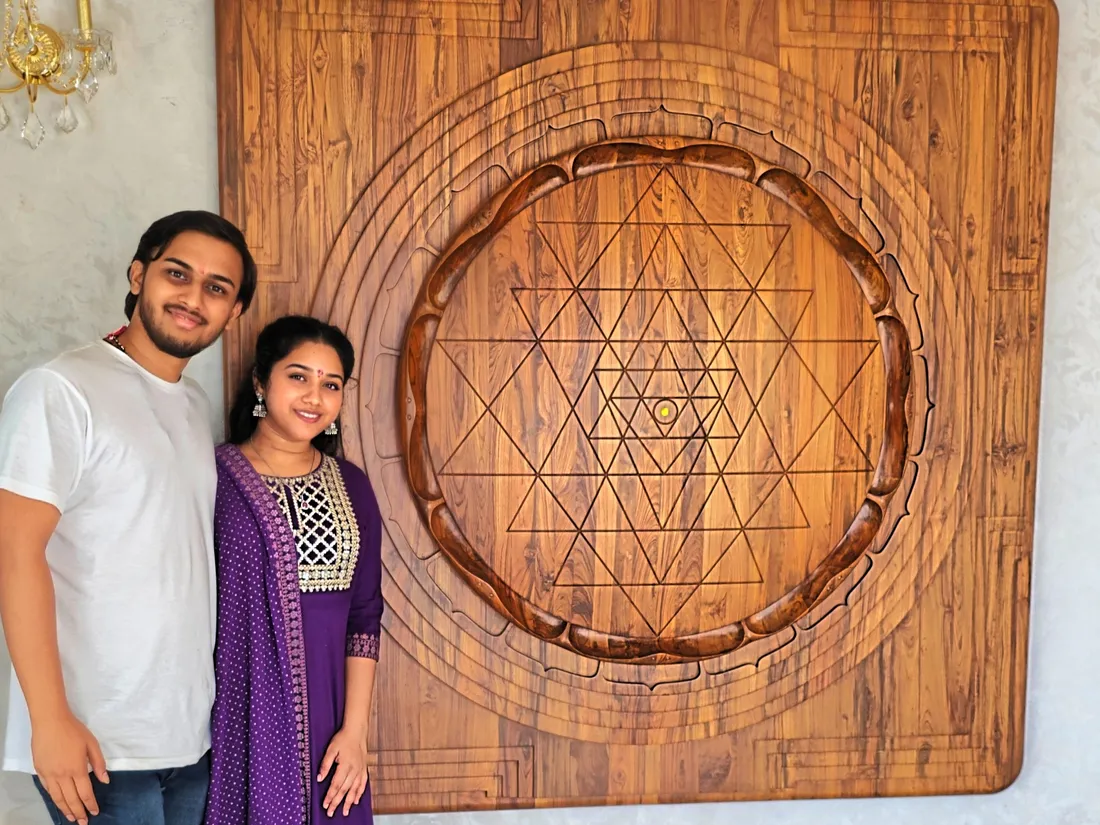
By the age of fourteen the Śrī Yantra was already being drawn by hand — its geometry arriving, as we would put it, through devotion as much as instruction. What began as a child’s fascination became a discipline, and then a life: to go to the source, to study it from the inside, and to give back what we learn. We were shaped, too, by teachers in the swadeshi and dharmic tradition — among them Rajiv Dixit — who held that knowledge is meant to be shared freely, and that with it one can serve others without need of wealth.
Our mission
Our work is to preserve and present this knowledge with both accessibility and dignity. Too often the wisdom of Bhārat is reduced to superstition on one side, or mystified beyond reach on the other. We hold a third way: treat it as a precise, observable science — documented at the source, cited honestly, and shared freely with anyone willing to look.
What we study
Our study moves through six disciplines, each a doorway to the same cosmic order:
- यन्त्रYantra
- वास्तुVāstu
- ज्योतिषJyotiṣa
- योगYoga
- देवालय विज्ञानTemple Wisdom
- ब्रह्माण्ड विज्ञानCosmic Science
How we study
This is applied knowledge — the kind that cannot be gained within four walls. We do not visit a temple for an hour; we dwell in it for days, reading first the prāṇa of the land, then its architecture and iconography, until the place begins to disclose itself. The śāstras are read the old way, in conversation — question and answer in the guru-paramparā manner — and against a living case rather than as abstract theory, so that what is learned is experienced more than merely recited. Our approach is set out in full in Our Method.
What we make and do
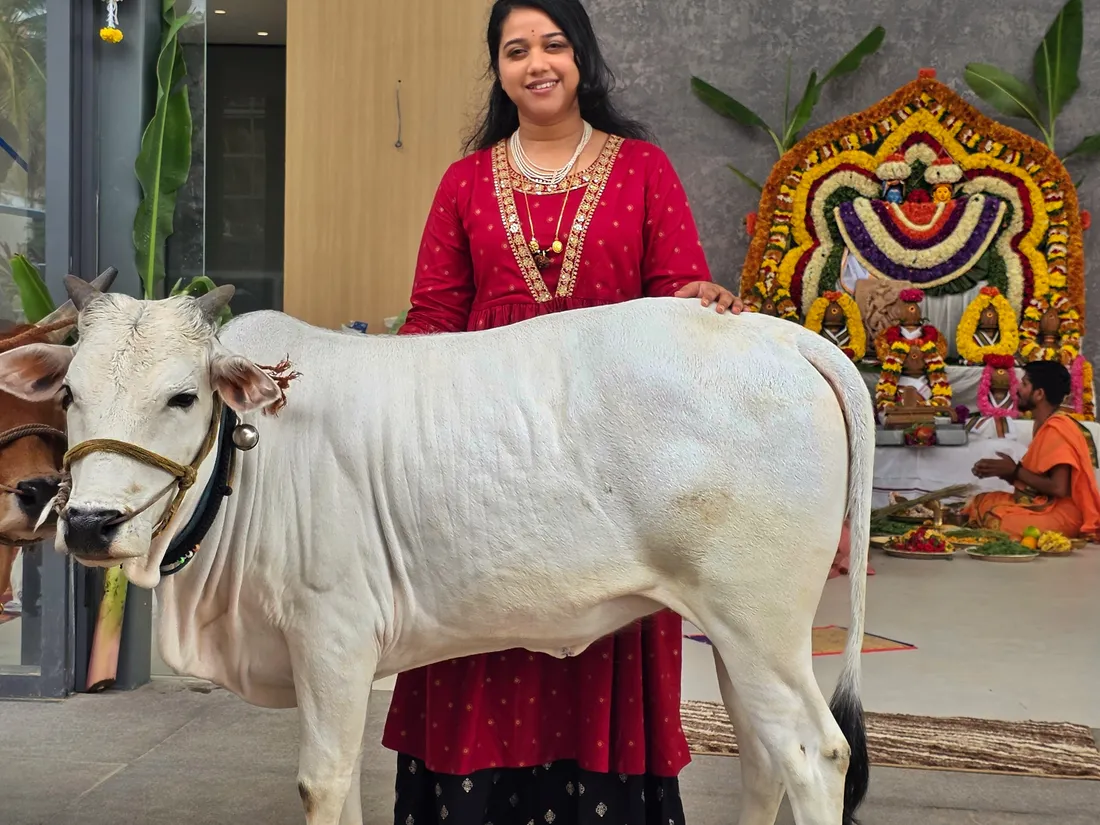
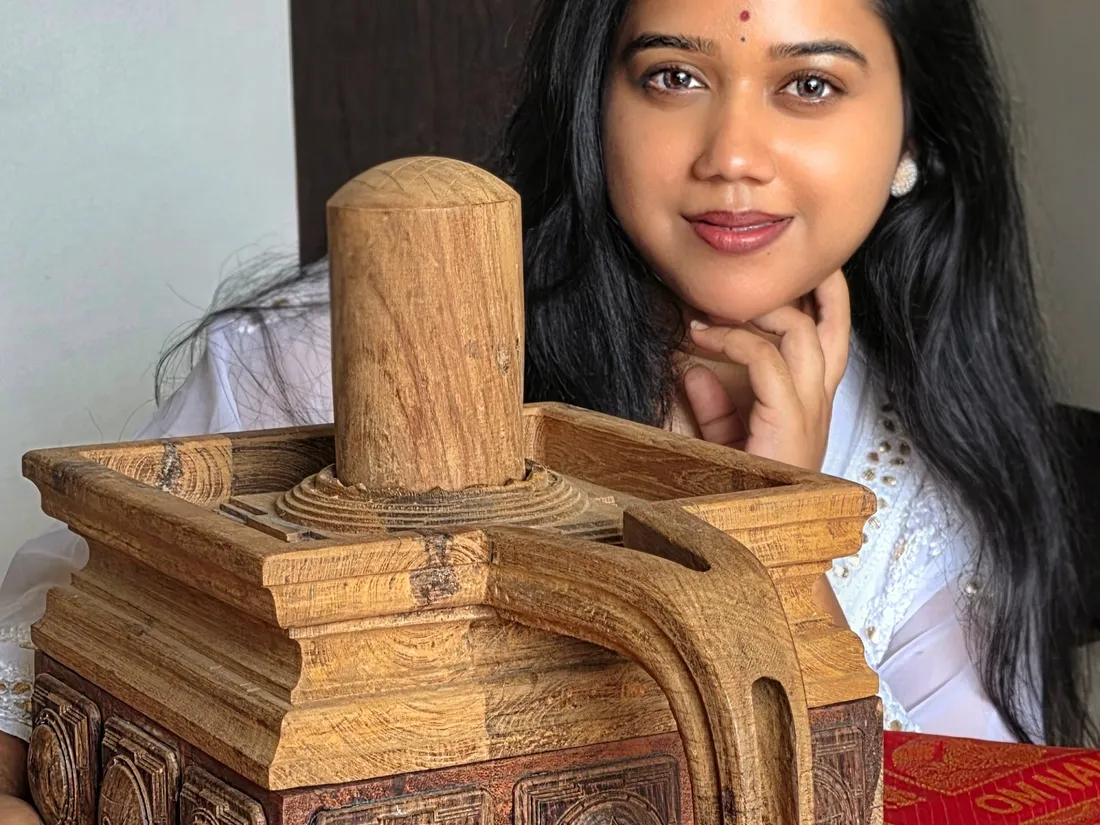
The research takes more forms than film. We design and consecrate yantras by hand — among them a Śrī Vidyā Śivliṅga built to the Kāśyapa Śilpa Śāstra. We lead small, carefully chosen temple expeditions deep into sites such as Ahobilam, and a twelve-day Vedic learning camp that raises children away from screens — among cows, in meditation, yoga, the martial arts, and the rudiments of sacred science. We also stand for the protection of ancient and heritage trees. Running through all of it is a single conviction carried from the Arthaśāstra: that a life lived free of debt — returned to zero — is the ground on which everything else can grow.
Why this work matters
This knowledge was never mythology to those who built it — it was observation, refined across generations and set into geometry, stone, and sound. Much of it is now fading from living memory. To read a yantra, a temple, or a nakṣatra is to recover a way of seeing in which mathematics, matter, and the sacred were never separate. We document it carefully because it is precise, testable, and ours to inherit — not a relic to admire, but a science to understand.
Who this is for
For the curious arriving from a film, who simply want to understand what they saw. For the serious student tracing a thread across texts and temples. For the practitioner seeking the why beneath the ritual. And for anyone — of any background — drawn to the dharmic traditions of Bhārat. There is no gate here: the films and writings are free, and the depth is there for those who wish to go further.
What makes this work distinct
- First-hand, at the source — we do not visit a temple for an hour but dwell in it for days, reading first the prāṇa of the land, then its architecture and iconography, until it begins to disclose itself.
- Read in the original — claims rest on named texts, places, and dates you can follow yourself, from the Bṛhat Parāśara Horā Śāstra to the Mānasāra, Mayamata, and the Kāśyapa Śilpa Śāstra — studied against the living case, not as abstract theory.
- Made, not only studied — yantras designed and consecrated by hand, among them a Śrī Vidyā Śivliṅga built to the Kāśyapa Śilpa Śāstra.
- Treated as science — observable, testable, open to question — never dogma.
- Free, and reverent — no sponsorship, no brand, nothing sold; the research is shared openly and meant to stand as a living archive, with consultation the one thing offered on request.
Why it is free
Everything here is offered without charge and without a catch. There is no sponsorship, no brand, nothing sold; you will not find a “like, share and subscribe” pressed upon you. The work began simply because there was an overflow worth giving away, and it is meant to stand as a living archive for the generations to come — enough if it reaches even one person who needs it. Knowledge, we hold, is meant to be given.
Why you can trust this
We document our work the way researchers do, and offer it the way seekers should — honestly, and without exaggeration. Where we have stood is named — Amarnath, Yaganti, Somanath, Ahobilam; what we drew from is cited; how we study is set out plainly in Our Method. A fellowship of more than 4,50,000 seekers follows this work across platforms — not for spectacle, but because here the wisdom of Bhārat is treated with the seriousness it deserves.

आचार्य
The Voice Behind the Work
Thathpara Ahoratra
Thathpara Ahoratra began the way most true journeys do — with a question that would not rest. Why does a Yantra hold its flawless symmetry? Why do thousand-year-old temples still carry a science we are only now learning to read?
That question became a discipline. Rather than study from texts alone, we go to the source — to the ice caves of Amarnath, the ever-growing Nandi at Yaganti, the Baan Sthamb of Somanath, the shrines of Nava Narasiṁha at Ahobilam — and record each wonder exactly as we find it, citing what we drew from as we go.
Over time the threads gather into a single weave: the Śrī Yantra’s geometry, the mystery of 108, the planetary order of the kuṇḍalī, the kinship of atom and cosmos. We follow them with the patience of researchers and the heart of seekers — because we believe the ancients were not dreaming. They were observing.
And what we learn, we also make — designing and consecrating yantras by hand, carrying the geometry from study into form.
तत्पर अहोरात्र — devoted, through day and night. What we learn we share freely: no sponsorship, no brand, nothing sold — only a living archive for anyone willing to look.
अनुभव
In Your Words
Share your experience
If this work has helped you see something more clearly, you are welcome to tell us. We read every note, and — with your blessing — may share it with the fellowship.
The Wisdom Letter
Read along from the field
When we return from a temple or finish a study, we write. Occasionally, never noise.
Just your email — privacy. Unsubscribe anytime.
